Introduction to IRRBB: Measuring and Managing
Build the full IRRBB measurement and management toolkit from the ground up
A practical, hands-on course that builds the full IRRBB toolkit from the ground up: yield curve construction, cashflow projection for a real-scale banking book, ΔNII and ΔEVE under regulatory and custom stress scenarios, behavioral models for deposits and prepayment, and hedge program design with swaps, caps, and swaptions — all in runnable code on a single reference bank you get to know from the first lesson.
Introductory to Intermediate · 8 modules · 48 lessons · 35 labs · 3 deep dives · ~20h · English · Instructors: Diogo Gobira & Lucas Processi
What You'll Learn
Build Yield Curves from Market Data
Bootstrap zero curves from par swap rates, choose interpolation methods, extract forward rates and discount factors — the foundation every IRRBB metric sits on.
Project Cashflows for an Entire Banking Book
Load a full banking book — mortgages, commercial loans, securities, deposits — and project every cashflow under any market scenario in seconds.
Master Fixed-Income Sensitivities
Price instruments from the ground up, then decompose their risk: duration and DV01 for parallel exposure, convexity for large moves, key rate duration for tenor-specific risk, and spread duration for credit — the metrics that drive hedging decisions and feed every IRRBB report.
Measure ΔNII and ΔEVE
Compute net interest income sensitivity and economic value of equity under the six BCBS standard scenarios, build the maturity gap and repricing schedule, and run the 15%-of-Tier-1 outlier test.
Add Behavioral Realism
Calibrate deposit beta and decay, fit prepayment S-curves, and see how behavioral assumptions reshape the IRRBB picture — the gap between contractual and behavioral is often the dominant risk.
Build Custom Stress Scenarios
Move beyond regulatory fixed scenarios: PCA-based scenario generation, historical simulation at any confidence level, what-if analysis for new transactions, and dynamic ΔNII that captures deposit migration.
Design and Price Hedge Programs
Close the duration gap with swaps, protect asymmetric risk with caps and swaptions (priced with Black and G2++), and build caterpillar hedges for NMDs — then evaluate the full program against 8 scenarios.
The Most Hands-On IRRBB Training Available
Join Waiting ListOn-Demand Video Lessons
48 core lessons across eight modules, structured to be watched in order or revisited on demand. Each lesson is under 15 minutes — focused, dense, no filler.
35 Interactive Labs
Every metric you learn is computed on a real-scale balance sheet — curves, cashflows, gap reports, ΔNII waterfalls, KRD profiles, hedge overlays, and multi-sheet Excel exports.
3 Deep Dives
SOFR conventions and variants, EVE discount curve choices (risk-free vs funding cost vs commercial margin), and behavioral modeling industry evidence compiled from 33 public sources.
One Bank Throughout
Every lab runs on Aizembank, a $50 billion synthetic US regional bank calibrated to real balance-sheet proportions from the Fed's H.8 report and public 10-K filings. You know every line of its balance sheet by the end of Module 0.
Real Historical Data
Real historical OIS curve data (USD and EUR) for PCA, volatility analysis, and custom scenario construction — the same type of data a real ALM desk would use.
Lifetime Access
Revisit lessons, labs, and datasets anytime — including future updates to the material.
Who Should Attend
This course is built for the people who measure, manage, and govern interest rate risk in the banking book — and for those who want to understand what's inside the numbers they review.
ALM and Treasury
You own the IRRBB framework and need to explain every basis point of ΔEVE and ΔNII to the board and the supervisor.
Risk Management
You set limits, run stress tests, and produce the IRRBB reports that feed Pillar 2 — this course gives you the machinery behind the numbers.
IRRBB and Market Risk
You build the scenarios, compute the shocks, and validate the behavioral assumptions — and you want a hands-on toolkit, not just a regulatory text.
Quantitative Analysts
You implement the models — yield curves, behavioral decay, prepayment S-curves, G2++ — and want production-quality code patterns in Python.
Validation and Audit
You review IRRBB methodology, challenge assumptions, and need to understand what each model choice does to the output.
Supervisors and Regulators
You assess how banks measure and manage IRRBB — this course shows you exactly what's inside a well-built framework.
System Implementers
You configure ALM and IRRBB modules — this course gives you the economics behind the parameter screens.
Meet our instructors


Diogo Gobira
Designs and implements ALM and IRRBB frameworks for financial institutions
Designs and implements ALM and IRRBB frameworks for financial institutions — interest rate risk measurement, behavioral modeling, hedge strategy design, and the integration of funding, liquidity, and capital costs into balance-sheet decisions.
MSc in Mathematical Finance (IMPA). Former Market Risk and Quantitative Modelling Manager at BNDES. Co-founder of Financial Risk Academy. Teaches Strategic ALM in the BTRM Certification Programme. Co-author of ALM Modeling and Balance Sheet Optimization: A Mathematical Approach to Banking.
Lucas Processi
Specialist in market risk management, ALM, and balance sheet optimization
Specialist in market risk management, ALM, and balance sheet optimization. Develops and implements the cashflow projection and fixed-income analytics infrastructure — yield curve construction, contract modeling, sensitivity computation, and IRRBB measurement engines.
Builds high-performance, auditable financial systems that scale from a single bond to a full banking book. Co-founder of Financial Risk Academy. Co-author of ALM Modeling and Balance Sheet Optimization: A Mathematical Approach to Banking.
Certificate
Boost Your Career with Our Exclusive Certificate
Showcase your command of IRRBB measurement and management with a certificate that evidences hands-on work across the full toolkit — from yield curve construction and cashflow projection to ΔNII, ΔEVE, behavioral models, stress scenarios, and hedge program design on a real-scale banking book.
Join Waiting List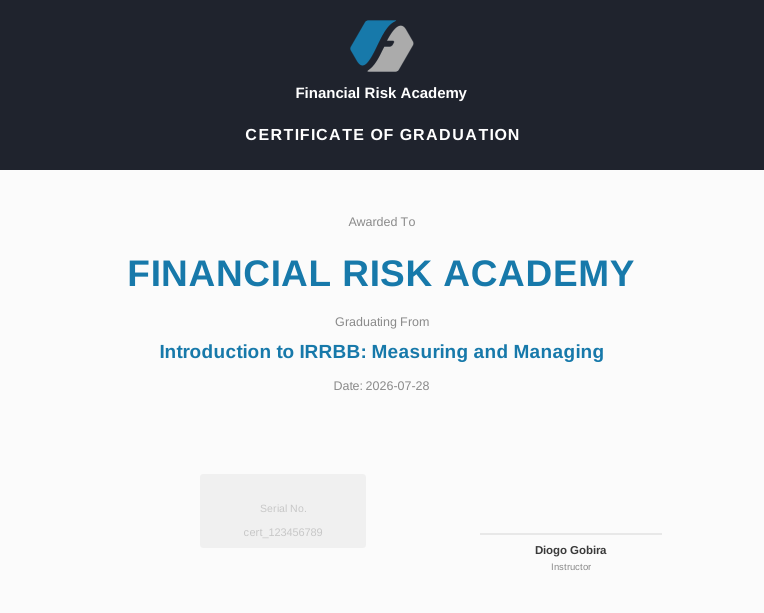
Course Objectives
Every bank that holds loans and takes deposits faces interest rate risk in the banking book. Get the measurement wrong and the hedge is wrong — the board sees a number that doesn't reflect reality, and the supervisor sees a gap that shouldn't be there.
This course builds the full IRRBB measurement and management toolkit one component at a time, on a single $50 billion reference bank used throughout: yield curves and discount factors, contract projection and gap reports, duration, DV01, key rate duration and spread duration, ΔNII and ΔEVE under the six BCBS standard scenarios and custom stress tests, behavioral models for deposits and prepayment, dynamic IRRBB formulation, and hedge program design with swaps, caps, swaptions, and caterpillar strategies. Participants compute every metric in code, validate it on real historical data, and export production-ready reports — not slides, not spreadsheets, but the actual analytics pipeline.
Course Curriculum
What People Are Saying
Trusted by banking and risk professionals from leading institutions worldwide.
I can't speak highly enough of my experience in taking Diogo and Lucas' course on ALM modelling balance sheet optimization. The course has certainly exceeded my expectations, providing me with not only a stronger understanding of the balance sheet and optimization process but a strong foundation in coding using Julia.

Shane Dolan
Senior Manager, Group Treasury - Commonwealth BankDiogo Gobira and Lucas Processi have put together a wonderful course presenting a fresh take on ALM and optimization of the balance sheet. I honestly believe the material presented in this course will eventually lead to new software in this space. By taking this course, you'll have a leg up on the rest of the job market.

Brent Ritterbeck
ALM ExpertNo doubt in saying that it is one of the best courses in ALM and Balance Sheet Optimization. The course curriculum is very structured and highly practical oriented. Given Diogo's and Lucas's rich industry experience, they provided us with real-world examples. I recommend it to everyone working in ALM, Liquidity Risk, IRRBB and Risk Analytics.

Kumar Ravi
Director - Risk Analytics at Solytics PartnersLet's be honest.. most internal bank trainings are designed to tick compliance boxes, not to build real capability. This course is different. It's hands-on, intellectually demanding, and fully aligned with the actual challenges ALM teams face. This course transformed how I approach ALM.

Mamdouh Alomari
ALM Manager - Saudi BankThe work of Gobira and Processi in the field is truly unique, as they provide an integrated and practical framework for addressing these challenges. Beyond theoretical discussions, they provide quantitative applications that can be considered state-of-the-art in both academic and market contexts. I am fascinated.

Guilherme Lamounier
Treasury ExpertOver the past 12 weeks, I had the opportunity to complete the certification "Building an ALM & Balance Sheet Optimization Model" with Financial Risk Academy — a program that goes far beyond theory, bringing real-world ALM challenges into a fully executable optimization framework. Special thanks to Lucas Processi and Diogo Gobira for designing one of the most practical and forward-looking programs in ALM and balance sheet modeling.

Juan Martin Erazo Morales
What our students are saying
The instructors at Financial Risk Academy are experts, highly academically trained, and bring a wealth of market experience in finance & quantitative risk models.
Luis A. Esteves
Chief Economist, Northeast BankExcellent videos. Great teaching.
Pedro Henrique de Mello Lula Mota
Portfolio Manager, VeriosCongratulations Diogo Gobira, as always, your courses are sensational and well-structured.
Denis Pereira
Head of Risk, Modelling and Research, FGCVery good introductory course to R!
Vitor Magalhaes Silva
Chief Advisor Market Risk, National Bank of CanadaA practical course, no beating around the bush, no hiding any information. I'm a student in the ALM course, and despite the inherent difficulty in this subject, I'm managing to keep up with the course. Highly recommend!! These guys are good.
Adilson Moraes da Costa
Owner, Logica Actuarial ConsultingA very good course. I plan to watch the classes with the codes again and try to execute in the same order. Julia programming. Definitely, the practice is the highlight.
Carlos Bandeira
Executive Manager of Market and Liquidity Risks, BanrisulAny questions?
Check out the FAQs
Still have unanswered questions and need to get in touch?
Still have questions?
Whatsapp usThe classes are recorded. Videos are short and focused — most between 8 and 15 minutes — designed to be watched in order or revisited on demand.
Approximately 20 hours of recorded content across 48 lessons, 35 interactive labs, and 3 deep dives, organized into eight modules.
A lab computes and draws what the lesson just explained — the curve, the gap report, the ΔEVE waterfall, the hedge overlay — on the Aizembank balance sheet, so you see the numbers move. A deep dive is an optional advanced track that explores a specific topic in depth: SOFR conventions, EVE discount curve choices, or behavioral modeling industry evidence. You can complete the course without the deep dives.
The course starts at an introductory level. You should be comfortable with basic fixed-income concepts — a yield curve, a discount factor, what a loan and a deposit are. No programming experience is required: the labs teach Python by doing, and the syntax is introduced on the fly.
Python and the course packages. Setup instructions are provided in Module 0. All data ships with the course — no API keys, no external downloads.
No. Students have lifetime access. We understand that each person has their own pace and goals, so you can complete the material whenever it suits you best.
Yes. All Python code — the projection engine, the sensitivity functions, the scenario builders, the hedge pricing — is provided as part of the course for personal and institutional use.
Students can ask questions through the forums in each lesson. For specific queries, the instructors can also be reached via direct message.
We accept all major credit and debit cards (Visa, Mastercard, Amex), as well as Apple Pay, Google Pay, and Link — all processed securely through Stripe. For wire transfer or PayPal, contact us directly.
Our Courses
Advanced training, proprietary tools, and strategic partnerships across financial risk management disciplines — from basic risk management to advanced balance sheet optimization.
FTP and All-In Loan Pricing
Build a bank's all-in transfer price from the ground up. Most pricing models hide their assumptions — this course opens the box: the funding curve, the liquidity term structure and buffer cost, expected loss, and the capital charges for credit risk and IRRBB. Then use the full stack to manage the banking book and price incrementally on a live balance sheet.
Instructors: André Camatta & Diogo Gobira
ALM & Balance Sheet Optimization
Master the full cycle of strategic Asset-Liability Management. Learn to build a balance sheet optimization model using stochastic dynamic programming — covering contract modeling, ETLs, risk constraints, liquidity management, and capital optimization. Written by the authors of the Moorad Choudhry Global Banking Series.
Instructors: Diogo Gobira & Lucas Processi
 Introduction
Credit Risk Modeling — Introduction
A comprehensive introduction to the key concepts, modeling techniques, and management challenges in credit risk — at both the transaction and portfolio levels. Topics include PD/LGD/EAD modeling, CECL, credit stress testing, loan rating systems, and portfolio-level risk analytics.
Instructors: New Frontier Analytics
Advanced
Credit Risk Modeling — Advanced
This course will provide a rigorous and practical framework for understanding, modeling, and managing credit risk across the full spectrum — from individual transaction assessment to portfolio-wide risk analytics. Developed in partnership with New Frontier Analytics, a leading model development and validation firm based in the United States.
Instructors: New Frontier Analytics
Worldwide community
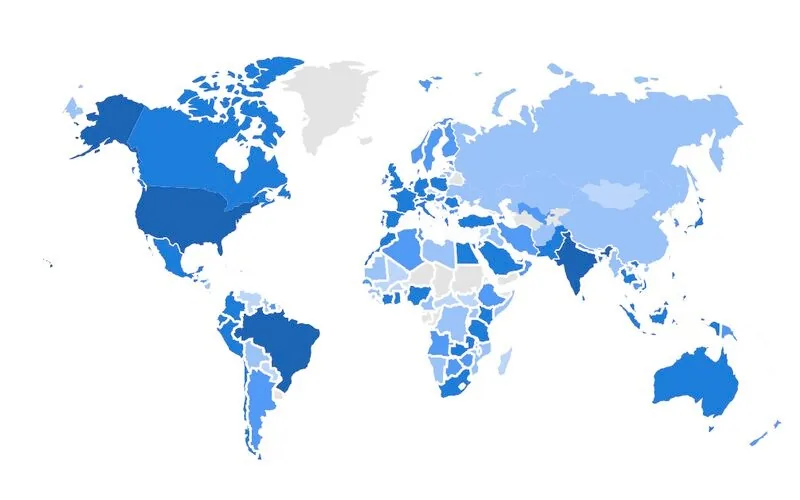
Our students come from all over the world, representing all five continents, diverse cultures, and unique backgrounds. This global community brings a rich exchange of perspectives, making the learning experience even more dynamic and enriching. No matter where you're from, you'll be part of an international network of professionals, all united by a passion for mastering ALM and financial optimization